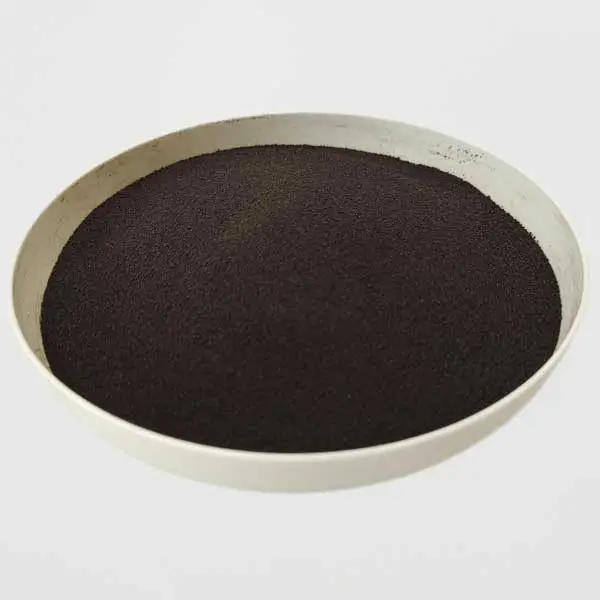
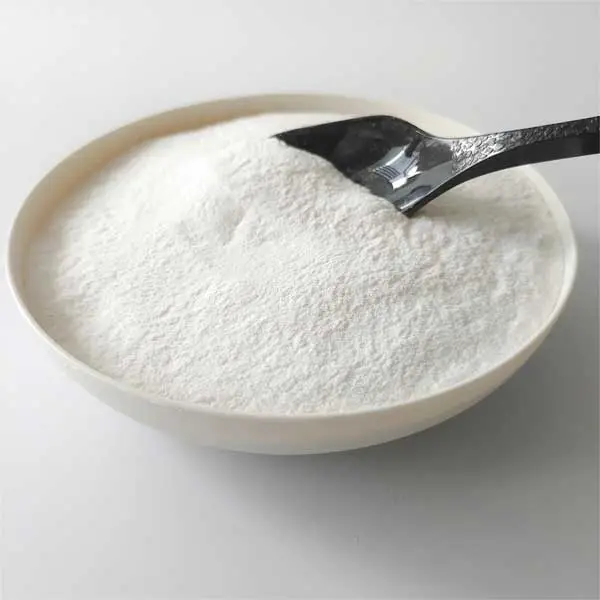
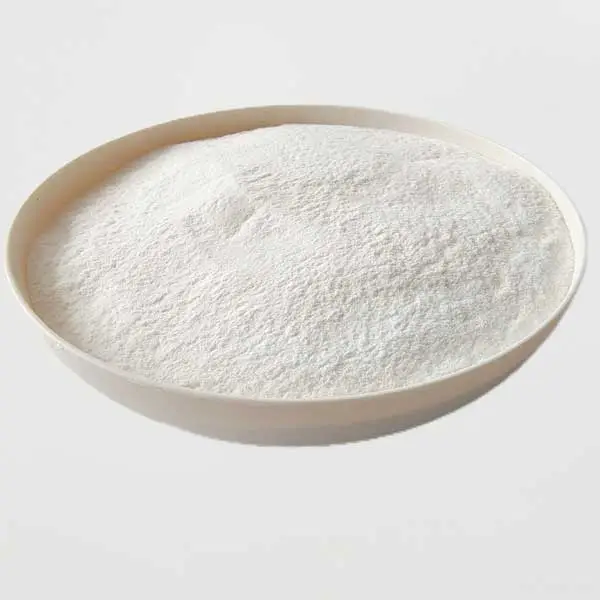
The role of a superplasticizer in concrete is to improve cement-particle dispersion so that the mixture can achieve higher flow without simply adding water, or maintain similar workability with a lower water-to-binder ratio. That distinction is central to understanding its effect on strength and durability: a superplasticizer does not create strength by itself; it creates the rheological freedom to reduce water, improve placement or both.
High-range water reducers classified under ASTM C494/C494M are widely used in high-performance, pumped, precast and self-consolidating concrete. The category of superplasticizers includes different chemistries, so the way workability changes over time depends on polymer type, cement compatibility, temperature and dosage.
What Happens to Cement Particles After a Superplasticizer Is Added?
Fresh cement paste naturally contains flocculated particle clusters. Water becomes trapped inside these clusters and is not fully available for flow. Superplasticizer molecules adsorb to particle surfaces and increase repulsive forces between particles. As the clusters disperse, trapped water is released into the continuous phase and the mixture becomes more fluid.
Traditional sulfonated superplasticizers rely strongly on electrostatic repulsion, while PCE chemistry adds a pronounced steric-hindrance effect from polymer side chains. This difference helps explain why PCE powder can deliver high dispersion at relatively low dosages and why its molecular structure can be adjusted for different initial-flow and retention profiles.
Does Superplasticizer Increase Concrete Strength?
It can support higher strength when its water-reducing capability is used to lower the water-to-binder ratio while maintaining adequate placement and compaction. Less capillary water generally means a denser hardened microstructure after hydration and curing. However, if the admixture is used only to increase slump at constant water content, the strength gain may be smaller or depend on secondary effects such as improved consolidation.
This is why mix records should distinguish between two strategies: “same slump, less water” and “same water, more slump.” Both are legitimate uses, but they are not equivalent. Strength, permeability, shrinkage and finishability need to be evaluated against the actual strategy rather than attributing every improvement to the admixture itself.
How Does Superplasticizer Affect Rheology and Pumpability?
Slump is a useful field index, but it does not fully describe rheology. Pumped concrete also depends on yield stress, plastic viscosity, paste volume, aggregate grading and lubrication at the pipe wall. A superplasticizer can reduce the force required to initiate flow, yet an overly viscous or poorly graded mixture may still require high pumping pressure.
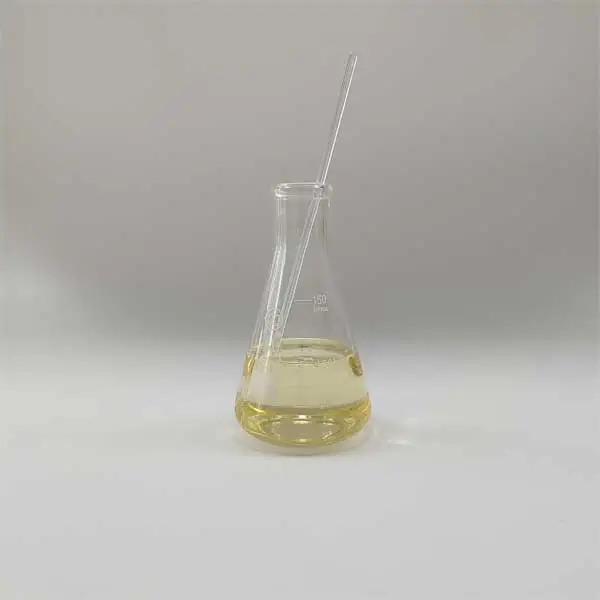
A well-selected polycarboxylate superplasticizer liquid can be formulated to balance water reduction and retention for ready-mixed concrete. A naphthalene superplasticizer may provide strong initial dispersion and can remain effective in many established pump mixes. The practical comparison should include pressure, cohesion and time-dependent flow, not only initial slump.
Why Does Slump Still Fall After Using a Superplasticizer?
Cement hydration continues after batching. New surfaces form, ions accumulate in the pore solution and polymer may be consumed or become less effective as the system evolves. Temperature accelerates these changes. Cement fineness, sulfate balance, C3A content, SCMs and aggregate fines can also alter adsorption behavior. As a result, a mixture can start with excellent flow and still lose workability too rapidly for transport and placement.
PCE molecular design can improve retention, but there is always a project-specific window. A 20-minute precast cycle and a 90-minute ready-mix delivery do not need the same adsorption and release profile. Retention should therefore be tested at the time intervals that represent actual batching, driving, queuing, pumping and finishing.
Can Too Much Superplasticizer Harm Concrete Performance?
Yes. Overdosing can produce excessive fluidity, segregation, delayed setting, air-content changes, finishing difficulties or inconsistent early strength, depending on the chemistry and mixture. The response is not linear: once cement-particle surfaces approach effective saturation, additional admixture may deliver little useful dispersion.
The complete concrete chemicals package must also be checked because a retarder, accelerator, air-entraining agent or defoamer can change the apparent optimum dosage. Laboratory optimization should therefore use the final admixture combination rather than a superplasticizer alone.
What About Setting Time and Air Content?
Superplasticizer selection can affect more than flow. Some combinations delay setting, while others alter the stability or measured content of entrained air. These effects may come from the polymer itself, from defoaming or air-entraining components in the commercial formulation, or from interactions with other admixtures. For structural concrete exposed to freeze-thaw conditions, maintaining the specified air system can be as important as achieving the target slump.
A procurement specification should therefore include more than minimum water reduction. Useful acceptance criteria may include solids content, chloride limits, density or bulk density, recommended dosage range, compatibility requirements, retention target and test methods. The plant should also define what triggers a requalification trial, such as a cement-source change, new supplementary cementitious material, major temperature shift or reformulated admixture. This prevents the mix from drifting away from the conditions under which it was originally approved.
A Better Way to Verify the Role of Superplasticizer in a Trial Mix
Trial variable | Measure immediately | Measure over time / hardened state |
Control mix | Slump/flow, air, temperature | Slump loss, set, strength |
Lower SP dosage | Same measurements | Retention, bleeding, strength |
Target SP dosage | Same measurements | Retention, pumpability/finish, 1/7/28-day strength |
Higher SP dosage | Same measurements | Saturation behavior, segregation, setting delay |
This test plan separates initial workability from time-dependent behavior and hardened performance. It also makes it easier to identify the point where extra dosage stops providing useful water reduction and begins to create side effects.
FAQ
What is the main function of a superplasticizer?
Its main function is to disperse cement particles, allowing more workability at the same water content or less water at similar workability.
Does superplasticizer change the water-cement ratio?
Only if the mix designer actually reduces the mixing water. Adding superplasticizer at constant water content increases flow but does not by itself lower the water-cement ratio.
Why can two superplasticizers give different slump retention?
Polymer chemistry and molecular structure affect adsorption and dispersion over time. Cement chemistry, temperature, SCMs, aggregate fines and mixing sequence further influence the retention profile.
Should superplasticizer be added at the plant or later in the truck?
The dosing sequence should follow validated project procedures and supplier guidance. Delayed addition or redosing can change dispersion, air content and setting, so it should not be improvised without trial data and quality-control limits.
Conclusion
Superplasticizer is best understood as a rheology and water-demand control tool. Its value comes from creating a workable concrete mixture at a lower water level or delivering the flow required for placement, but the final result still depends on compatibility, dosage, time, temperature, consolidation and curing.

 English