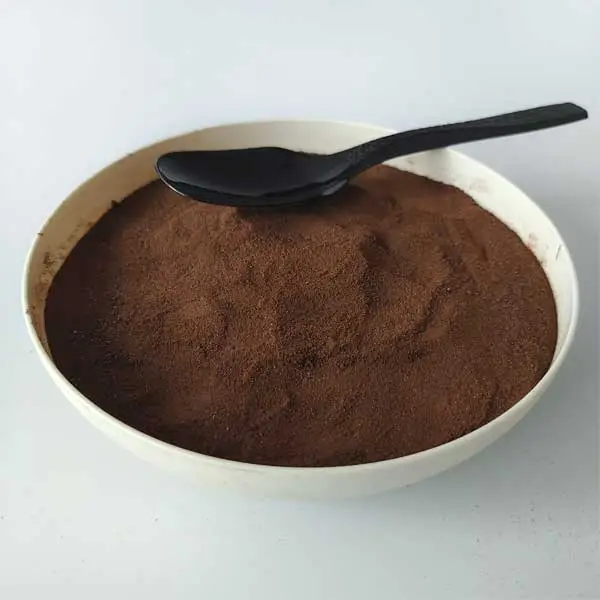
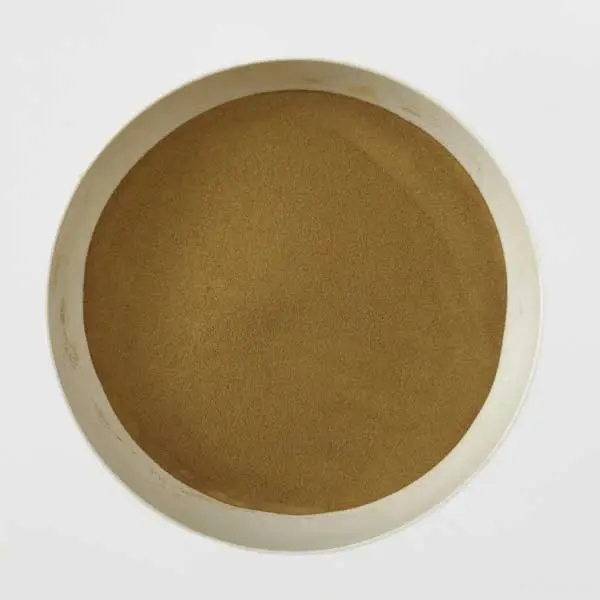
The most useful way to compare types of superplasticizer is by the performance problem they solve, not by treating newer chemistry as automatically superior. Polycarboxylate ether (PCE), sulfonated naphthalene formaldehyde (SNF) and sulfonated melamine formaldehyde (SMF) can all increase cement dispersion and reduce water demand, but they differ in mechanism, retention behavior, dosage, appearance, cost structure and sensitivity to the cementitious system.
In practice, a buyer should define four requirements before selecting a chemistry: required water reduction, required working time, early-strength or setting constraints, and the cement/SCM/aggregate combination. The broad family of superplasticizers includes products optimized for very different conditions, so a generic “high-range water reducer” label does not tell the whole story.

PCE: High Water Reduction with Tunable Molecular Design
PCE superplasticizers use a comb-shaped molecular structure. Carboxylate groups on the backbone adsorb to cement surfaces, while polyethylene-oxide side chains create steric hindrance that helps keep particles separated. Because side-chain length, density and anchoring groups can be adjusted, PCE chemistry can be designed for strong initial water reduction, extended slump retention or a compromise between the two.
This tunability is a major reason polycarboxylate superplasticizer powder is widely used in high-performance concrete, self-leveling systems and dry mortar. However, PCE can be sensitive to cement sulfate balance, C3A content, fineness, some supplementary materials and clay contamination in aggregates. The practical lesson is that a high laboratory water-reduction number does not eliminate the need for compatibility testing.
SNF: Strong Initial Dispersion and a Familiar Cost-Performance Profile
SNF disperses cement primarily through electrostatic repulsion. It has a long track record in ready-mixed, precast and pumped concrete and is often considered where strong initial flow and a familiar formulation cost are priorities. Compared with a well-designed slump-retaining PCE, conventional SNF may lose workability more quickly, especially when transport time is long or temperature is high.
A typical naphthalene superplasticizer may also be supplied in different sodium-sulfate grades. That detail matters because chemical composition can influence performance, concrete specifications and product cost. Jufu Chemical’s published SNF data, for example, list water-reduction ranges that vary by grade rather than presenting all naphthalene products as identical.
SMF: High-Range Water Reduction for Specific Cementitious Systems
SMF is another sulfonated condensation polymer that disperses particles largely through electrostatic effects. It is used in concrete, gypsum and specialty cementitious products where fluidity, early strength and a clean appearance can be important. Its white powder form can be attractive in formulations where color matters more than it does in conventional structural concrete.
The current Jufu Chemical page for sulfonated melamine formaldehyde resin lists a minimum 14% water-reducing ratio in its concrete test and highlights compatibility with cement and calcium-sulfate systems. As with PCE and SNF, that specification is a product-level reference, not a universal value for the entire chemistry family.
Manufacturer Data Snapshot: Why Grade-Level Information Matters
The table below summarizes selected published values from Jufu Chemical product pages. It should be used for screening only; test methods and formulation conditions are not necessarily identical across product families.
Chemistry / Jufu example | Published water-reduction value | Practical screening note |
PCE Powder 02 | ≥25% | High dispersion; verify cement and clay sensitivity |
SNF-A / SNF-B / SNF-C | 18–28% / 17–25% / 16–22% | Grade-dependent sulfate content and performance |
SMF Powder | ≥14% (concrete test) | Useful in cement/gypsum systems; white powder form |
Source: current Jufu Chemical product pages. These values come from different product specifications and are not a standardized head-to-head test.
How Should the Type Be Chosen for a Real Project?
A performance-based decision matrix is more reliable than selecting by generation name. For precast concrete, early strength, demolding time, surface finish and steam-curing behavior may dominate. For long-distance ready-mix delivery, workability retention and robustness against temperature change are critical. For dry mortar, powder compatibility, low-dose distribution and redispersibility can be more important than pumpability. For self-consolidating concrete, the balance between flow, viscosity and segregation resistance matters as much as the headline slump-flow number.
The wider concrete admixtures package must also be considered. Retarders, accelerators, air-entraining agents and supplementary cementitious materials can interact with the superplasticizer. If two admixtures are individually successful but incompatible when combined, the final concrete may show false set, delayed set, air instability, unexpected slump loss or segregation.
Why Temperature, Sulfate Balance and Fine Materials Can Reverse the Ranking
A chemistry that ranks first in a controlled laboratory test can move down the list when field conditions change. Higher concrete temperature accelerates hydration and usually shortens the useful workability window. Cement sulfate balance and aluminate reactivity influence how quickly admixture molecules are consumed or displaced, while very fine supplementary materials increase total surface area and can raise demand. Fine clay contamination is especially important for PCE because some clays can capture polymer molecules before they contribute to cement dispersion.
For this reason, procurement comparisons should not be based on dosage percentage alone. A lower nominal dosage does not automatically mean a lower treatment cost if the product has different active solids or requires a second admixture to achieve retention. Compare cost at the required concrete performance: target slump or flow, water content, retention time, air, setting and strength. This approach turns a chemistry comparison into a production decision rather than a price-per-kilogram exercise.
A Four-Step Compatibility Test That Produces Better Decisions
1. Fix the reference materials: use the actual cement, SCMs, aggregate source and water planned for production.
2. Compare equal performance targets: instead of dosing every chemistry at the same percentage, compare them at the same initial slump or flow, then record the required water and dosage.
3. Measure time-dependent behavior: test workability at the intervals that match batching, transport, waiting, pumping and placing.
4. Check hardened properties and constructability: include setting time, air content, bleeding, early strength, 28-day strength and finishing or pumping observations.
FAQ
Which type of superplasticizer is best for concrete?
There is no universally best type. PCE is often selected for high water reduction and tunable retention, while SNF or SMF can remain practical where their cost, setting behavior, appearance or established mix performance better fits the project.
What is the main difference between PCE and SNF?
PCE relies strongly on steric hindrance from its side chains in addition to adsorption, whereas SNF depends mainly on electrostatic repulsion. The difference influences dosage efficiency, retention behavior and sensitivity to the cementitious environment.
Can two types of superplasticizer be blended together?
Sometimes, but only after compatibility testing. Combining chemistries can change adsorption, air content, setting and retention in ways that are difficult to predict from individual product data.
Does a newer superplasticizer always reduce more water?
Not under every field condition. Polymer design, cement chemistry, dosage and test method all matter. A product that performs strongly in one binder system may be less efficient in another.
Conclusion
PCE, SNF and SMF should be treated as engineering tools with different response profiles rather than as a simple old-to-new ranking. The right choice is the chemistry and grade that meets the required flow, retention, strength, setting and durability targets with the actual project materials and production process.

 English