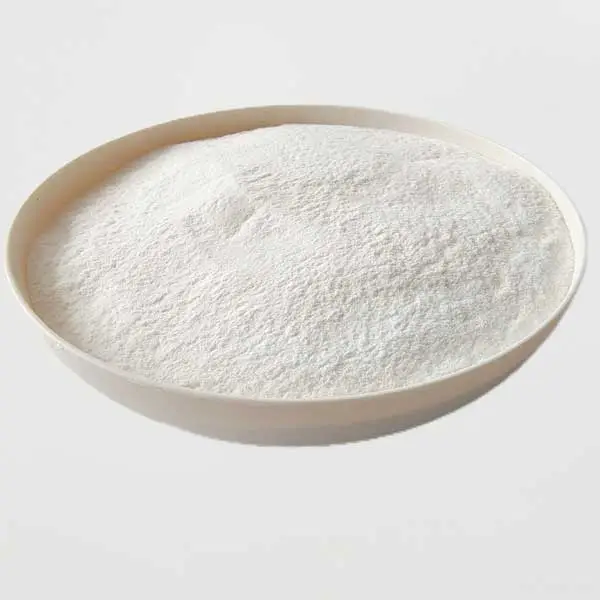
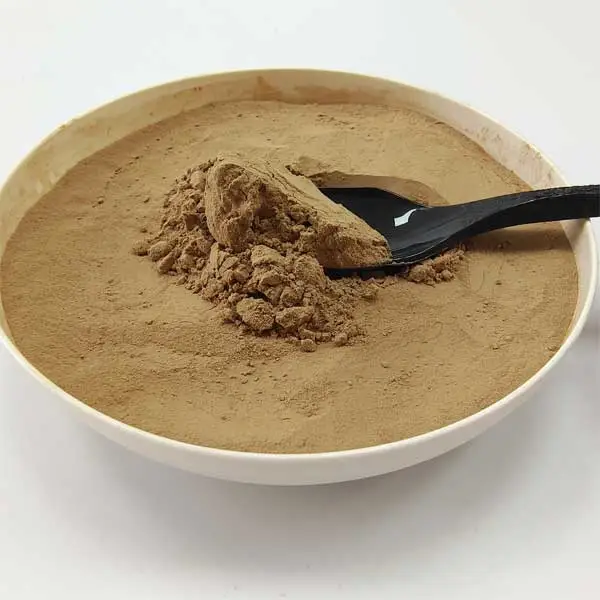
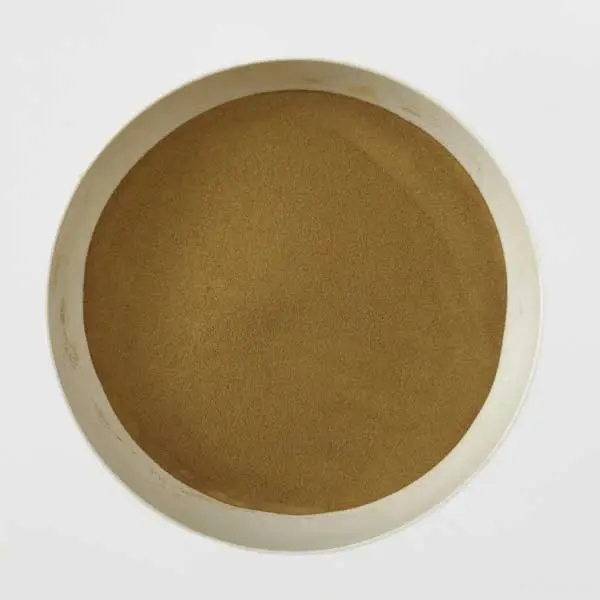
In the ceramics industry, the properties of the ceramic body mix often determine the quality of the final product. While traditional additives can enhance green body strength, they frequently come with trade-offs such as reduced plasticity, rising costs, or environmental concerns. Today, we turn our attention to a "green chemical" that transforms papermaking waste into a valuable resource: lignosulfonate. Beyond addressing key technical challenges in the ceramic forming process, its natural, renewable, cost-effective, and eco-friendly nature makes it a "silent driver" of the modern ceramics industry's sustainable transformation. Shenyang Xingzhenghe Chemical offers an in-depth look at how lignosulfonate makes ceramic materials—from raw mix to finished product—more "manageable" and more durable.
In short, lignosulfonate is a natural macromolecular by-product derived from the sulfite pulping process of wood, subsequently extracted and modified. It plays two key roles in the ceramics industry:
An efficient "dispersant-lubricant": Its molecular structure features hydrophilic sulfonic acid groups and lipophilic aromatic rings; it adsorbs onto the surface of ceramic raw material particles (such as clay, quartz, and feldspar) to form a thin film, effectively reducing inter-particle friction and resulting in a more uniform, plastic slip.
A natural "binder enhancer": As a macromolecular polymer, it creates "molecular bridges" between particles, providing additional temporary strength during the drying stage to prevent the green body from cracking or deforming.
Summary of core characteristics: It resolves the conflicting requirements for the material to be soft (for easy shaping) and the green body to be hard (for easy handling), making it a green additive with comprehensive and balanced performance.
To achieve optimal results with lignosulfonates, scientific dosing and application methods are crucial:
Selection and Dosage:
Liquid vs. Powder: Typically supplied as a brown powder that is readily soluble in water. Choose the appropriate form based on the production process (dry-mix or wet method).
Recommended Dosage: Generally 0.2% – 1.0% of the total weight of ceramic raw materials. The exact dosage should be determined through small-scale trials, taking into account raw material properties (such as clay type) and specific process requirements.
Application Process:
Pre-dissolution Recommended: Dissolve the lignosulfonate powder into an aqueous solution before adding it to the ceramic body mixture to ensure uniform dispersion.
pH Considerations: Performance is most stable in weakly acidic to neutral environments; compatibility with other additives (such as electrolytes) should be considered.
Precautions:
No Impact on Firing: As an organic additive, lignosulfonate burns off completely during the high-temperature firing stage (typically above 300°C), leaving no ash residue that would affect the final product's whiteness, glaze quality, or chemical composition.
Potential for Slight Coloration: Although the material itself is brown, at recommended dosage levels, it has no visible effect on the color of the vast majority of sintered ceramic products. For products requiring ultra-high whiteness, rigorous firing trials should be conducted to verify the outcome.

 English