Reasons for rapid slump loss:
1. Poor compatibility between concrete admixtures and cement leads to rapid slump loss.
2. Insufficient admixture dosage results in unsatisfactory retarding and plasticity retention effects.
3. High ambient temperature causes some admixtures to become ineffective at high temperatures; rapid water evaporation and air bubble overflow cause rapid slump loss in freshly mixed concrete.
4. The initial concrete slump is too low, and the unit water content is too low.
5. Poor coordination between the construction site and the batching plant leads to excessively long truck congestion and delays, resulting in excessive slump loss.
6. Concrete mixing scale;
7. The metering system has large and unstable measurement errors;
8. Variation in the moisture content of coarse and fine aggregates;
9. Cement is stored and used in mixed silos;
10. Is the cement hot cement that has just entered the silo? If so, a loss of 10 cm per hour is normal;
11. The compatibility between admixtures and cement is very poor. A cement paste flowability test can be performed. A flowability of 22-24 cm is acceptable, but the loss over time (half an hour or an hour) needs to be observed. If the loss is excessive, the admixture manufacturer needs to be contacted to readjust their formula. Specifically, for 300g of cement and 87g of water, the admixture is generally added at 1.8% or according to their recommended dosage;
12. Weather conditions also have a significant impact. In the current weather, a loss of 3 cm per hour is considered normal.
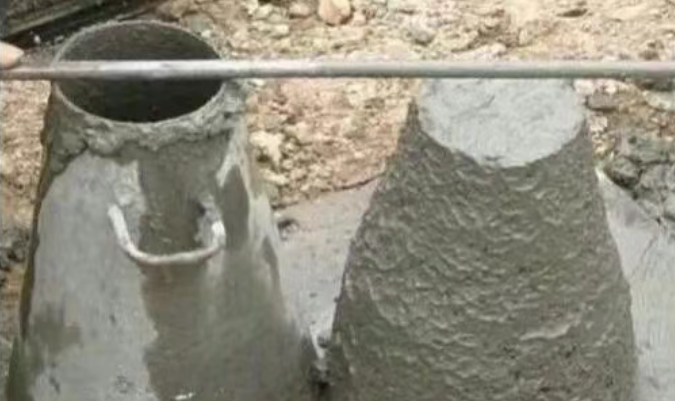
Solutions:
1. Adjust the concrete admixture formula to make it compatible with cement. 1. Before construction, a compatibility test between concrete admixtures and cement must be conducted;
2. Adjust the concrete mix proportion, increasing or decreasing the sand ratio and water content, and adjust the initial slump of the concrete to above 220mm;
3. Add an appropriate amount of fly ash to replace part of the cement;
4. Appropriately increase the dosage of concrete admixtures and adjust the retarding components in the admixtures (especially when the temperature is much higher than normal);
5. Prevent excessively rapid moisture evaporation and excessively rapid air bubble overflow;
6. Use slag cement or pozzolanic cement;
7. Improve the water retention and cooling devices of concrete transport vehicles;
8. The accuracy of metering equipment should meet relevant regulations and have a valid certificate of conformity issued by a legal metrology department. Strengthen self-inspection to ensure accurate measurement;
9. Strengthen the detection of aggregate moisture content, and adjust the mix proportion in a timely manner when changes occur;
10. Cement entering the warehouse should be stored and used separately according to manufacturer, type, and grade;
11. Post-addition of water-reducing agent: that is, add water-reducing agent after mixing sand, stone, cement, and water. This method is effective in suppressing slump loss. This is mainly because when cement comes into contact with water, in a gypsum-containing environment, C3A and C4AF in the cement can rapidly form ettringite, significantly reducing the amount of C3A and C4AF in the system. Adding a water-reducing agent at this point significantly reduces the amount of water-reducing agent consumed by C3A and C4AF adsorption.
12. Retarder method: Theories regarding the retarding effect of retarders on cement include adsorption theory, complex salt formation theory, precipitation theory, and controlled hydroxide crystal growth theory. Most organic retarders have surface activity; they adsorb at the solid-liquid interface, changing the surface properties of solid particles, i.e., hydrophilicity. Due to adsorption, the hydroxyl groups in their molecules hinder the cement hydration process on the cement particle surface, shielding the crystals from contact and altering the structure formation process.
13. Adjusting concrete admixtures: Using high-molecular-weight water-reducing agents in combination with appropriate amounts of water-retaining components increases the free water content in concrete without increasing water usage, thus mitigating slump loss.

 English