Applicability to Cement: Cement and cementitious materials have complex and varied compositions. From the perspective of adsorption-dispersion mechanisms, it is impossible to find a water-reducing agent that is suitable for all types. Although polycarboxylate water-reducing agents have a wider range of applicability than naphthalene-based agents, they may still have poor applicability to some types of cement. This applicability is mostly reflected in: reduced water reduction rate and increased slump loss. Even for the same type of cement, the effect of the water-reducing agent will differ when ball-milled to different finenesses.
Phenomenon: A cement batching plant supplied C50 concrete to a construction site using P-042.5R cement from the local area, along with a polycarboxylate-based high-efficiency water-reducing agent. When preparing the concrete mix proportions, it was found that the cement used a slightly higher amount of water-reducing agent than other cements. However, during actual mixing, the slump of the concrete mixture at the factory was visually estimated at 210mm. But when unloading the concrete into the concrete pump truck at the construction site, the truck could not be unloaded. After adding a bucket of water-reducing agent from the plant, the slump visually reached 160mm, basically meeting pumping requirements. However, during unloading, the problem recurred. The truck was immediately returned to the plant, where a large amount of water and a small amount of water-reducing agent were added, and it was barely unloaded, nearly solidifying in the mixer truck.
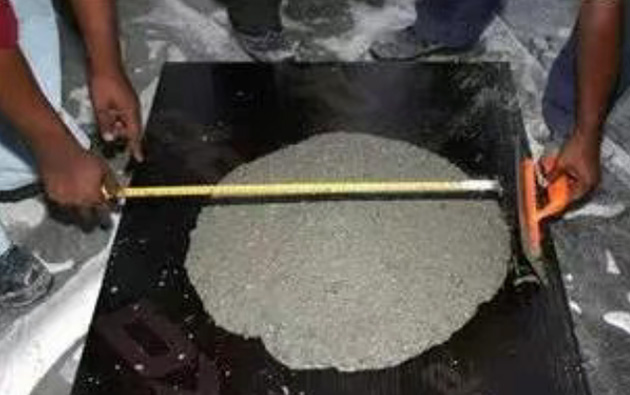
Cause Analysis: The plant failed to consistently conduct compatibility tests with the admixtures for each batch of cement before production.
Prevention: Conduct a remixing test with the construction mix proportions for each batch of cement before production. Choosing suitable admixtures is crucial. Cement using coal gangue as an admixture has poor compatibility with polycarboxylate superplasticizers and should be avoided.
Sensitivity to Water Consumption: The use of polycarboxylate superplasticizer significantly reduces the water consumption of concrete, with water consumption per cubic meter of concrete mostly between 130 and 165 kg; the water-cement ratio is 0.3-0.4, or even less than 0.3. Under low water consumption, fluctuations in water addition can lead to significant changes in slump, causing a sudden increase in the slump of the concrete mix and bleeding.
Example: A mixing plant used a certain cement to prepare C30 concrete. The contract required a slump of 150 mm ± 30 mm at the construction site. The concrete's measured slump at the factory was 180 mm. After delivery to the construction site, the slump was measured at 210 mm. Two consecutive truckloads of concrete were returned to the factory for verification, and the slump was still 210 mm, with bleeding and segregation observed. Cause: The cement has good compatibility with this water-reducing agent, but the dosage of the water-reducing agent is slightly too high. Insufficient mixing time results in the concrete slump at the mixer not reflecting the true slump.
Prevention: For cements sensitive to the dosage of polycarboxylate-based high-efficiency water-reducing admixtures, the admixture dosage must be appropriate and the metering accuracy must be high. Appropriately extend the mixing time; even with a twin-shaft forced mixer, the mixing time should not be less than 40 seconds, and preferably more than 60 seconds.

 English