Reasons for rapid collapse loss:
1. The admixtures used in the concrete do not mix well with the cement, causing the slump of the concrete to drop rapidly.
2. The amount of admixtures used in the concrete is insufficient, resulting in a prolonged setting time and poor plastic retention effect.
3. The weather is hot, and some admixtures will lose their effectiveness at high temperatures; water evaporates rapidly; bubbles overflow, causing the freshly poured concrete to rapidly collapse and lose.
4. The initial slump of the concrete is too small, and the unit water consumption is also too low.
5. The coordination between the construction site and the mixing station is not adequate, causing the tank transport vehicles to be compressed and hindered for a long time, resulting in excessive loss of concrete slump.
6. The measurement error of the concrete mixing and weighing system is large and unstable.
7. The moisture content of coarse and fine aggregates will change.
8. The cement is stored in a mixed storage bin and used in a mixed manner.
9. Is this bucket of cement just ordinary quick-setting cement? If so, a loss of 10 centimeters within an hour is normal.
10. These admixtures have poor compatibility with the cement. To check the fluidity of pure cement slurry, observe its consistency. Usually, a consistency of 15 centimeters is appropriate, but observe the loss over a period of time, such as half an hour or one hour. If the loss is too large, contact the admixture manufacturer to adjust the formula. Specifically, usually add 300 grams of cement, 87 grams of water, and 1.8% of the admixture, or add according to the recommended dosage.
11. Weather conditions also have a significant impact. In such weather, a loss of 3 centimeters in weight within an hour is a normal phenomenon!
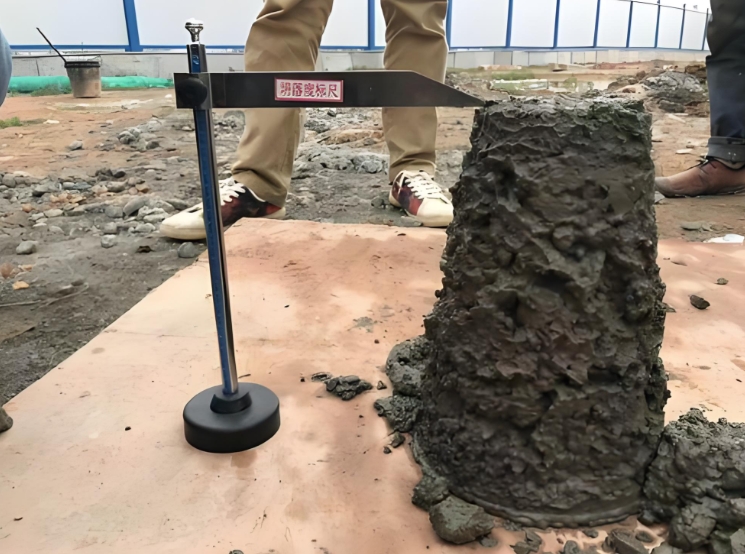
12. There are many reasons for rapid slump reduction, such as inappropriate admixtures, unstable cement performance, and long transportation time. These are all factors affecting the slump. The solution is simple: add water and admixtures.
Solution:
1. Adjust the admixture formula of the concrete to make it compatible with the cement. Before construction, it is necessary to test the compatibility of the admixtures with the cement.
2. Adjust the concrete mix ratio, increase or decrease the proportion of sand and water consumption, and adjust the initial slump of the concrete to be over 200 millimeters.
3. Add an appropriate amount of fly ash to replace part of the cement.
4. Increase the dosage of admixtures appropriately and adjust the retardant components in the admixtures (especially when the temperature is much higher than the usual temperature).
5. Prevent rapid evaporation of water and rapid overflow of bubbles.
6. Use slag cement or volcanic ash cement.
7. Improve the water retention and cooling devices of the concrete transport vehicles.
8. The accuracy of the measuring equipment should comply with relevant norms and hold a valid certificate issued by the legal metrology department. Strengthen self-inspection of the equipment to ensure the accuracy of measurement.
9. Strengthen the detection of the moisture content of aggregates and adjust the mix ratio in time when it changes.
10. The cement entering the warehouse should be stored and used according to the manufacturer, type and grade.
11. After adding the retarder: immediately add the retarder after mixing sand, stones, cement and water. This method has a significant effect on suppressing slump loss.
12. Retarder method: The retarder's retardation effect on cement includes adsorption theory, compound salt formation theory, precipitation theory and control of hydroxide crystal growth theory. Most organic retarders have surface activity. They adsorb at the solid-liquid interface and change the surface properties of solid particles, that is, hydrophilicity. Due to this adsorption effect, the hydroxyl groups in their molecules will hinder the hydration process on the cement particle surface, prevent crystal contact from each other, and change the formation process.
13. Adjust the admixtures of the concrete: Use high-molecular-weight retarders and combine them with appropriate water-retaining components. By increasing the free water content in the concrete without increasing the water usage, the loss of slump can be reduced.

 English