Post Date:2,Feb,2026
Water-reducing agents – the undisputed “King”
(1) What is it?
Water-reducing agents are a type of surfactant with a molecular structure that is hydrophilic on one end and hydrophobic on the other.
(2) Why add it?
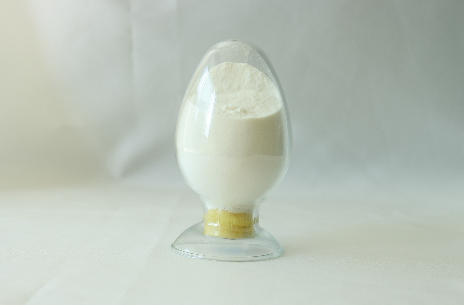
Plasticization: Without increasing water usage, it significantly improves the fluidity (slump) of concrete, making it flow easily like porridge, meeting the requirements of high-difficulty construction such as pumping and gravity flow.
Enhancement: While maintaining fluidity, it can significantly reduce mixing water (water reduction rate up to 40%). According to the well-known water-cement ratio law, the lower the water-cement ratio, the higher the strength and durability of the concrete. This is the core technology for preparing high-strength and ultra-high-strength concrete.
Energy saving: While maintaining strength and fluidity, it can save 10%-20% of cement usage, achieving both economic and environmental benefits.
Core mechanism: At the microscopic level, cement particles in water attract each other due to intermolecular forces, forming a flocculated structure that encapsulates a large amount of mixing water, preventing it from acting as a lubricant (see figure below). Water-reducing agent molecules adsorb onto the surface of cement particles, breaking up the flocculated structure through electrostatic repulsion (naphthalene-based, aliphatic-based) or steric hindrance (polycarboxylate-based), releasing the trapped "free water."
Representative product: Polycarboxylate-based water-reducing agents, due to their high water reduction rate, low dosage, environmental friendliness, and customizable performance, have become standard in high-performance concrete.
Accelerators
(1) What are they?
They are usually strongly alkaline substances (such as sodium aluminate) or alkali-free organic and inorganic salts.
(2) Why add them?
They are used in shotcrete, disaster relief, and water sealing projects. They rapidly accelerate cement hydration, allowing concrete to initially set within 2-10 minutes, quickly establishing early strength and ensuring timely support or rapid sealing of water flow at rock excavation faces.
Technological Evolution: Traditional high-alkali accelerators are harmful to workers and cause significant loss of later strength. Today, alkali-free/low-alkali accelerators have become the mainstream trend. They ensure rapid setting while being virtually free of alkaline corrosion and ensuring that the later strength of the concrete does not shrink.

Retarders
Coping with High Temperatures: During summer construction, they delay setting to prevent concrete from losing fluidity during transportation and pouring.
For large-volume concrete: They delay the peak heat release during hydration, preventing temperature cracks caused by excessive internal and external temperature differences. Continuous casting of complex structures: Provides sufficient time window to ensure the quality of construction joints.

 English